Featured
From Visitor Chaos to Full Control: How Technology Is Changing Estate Security

Praise Ohans
2026/02/02
Introduction
Manual visitor control remains one of the biggest estate security challenges today. Paper visitor logs and shared access methods break down during real conditions. Guards having to rely on their handwriting, and memory only leads to unavoidable errors like inaccurate records. This is the core problem with manual visitor log systems. They document presence without enforcing control.
Shared keys, and access cards further compound the risk. Once access is granted, it is rarely revoked properly. These passes can be easily reused, exposing residents to unauthorized access by strangers, often without immediate detection. This is one of the leading causes of security risks in gated estates in Nigeria.
The rise in package theft and security incidents also highlights these weaknesses. When an item goes missing, paper records offer little help as logs fail to confirm identity. They do not show movement within the estate or provide clarity on who approved entry, how long access lasted, and whether access conditions were violated. Investigations become an uphill task because the data needed simply does not exist.
The over dependence on people doing everything right every time makes traditional estate security systems fail at scale. As estates grow, traffic increases and pressure on security staff rises. Manual checks may work for small estates, but will collapse completely when visitor volume, deliveries, and service providers increase. Without a structured, and verifiable access control, estates remain exposed despite visible security presence.
Smart Visitor Management Systems Bring Order to Estate Access
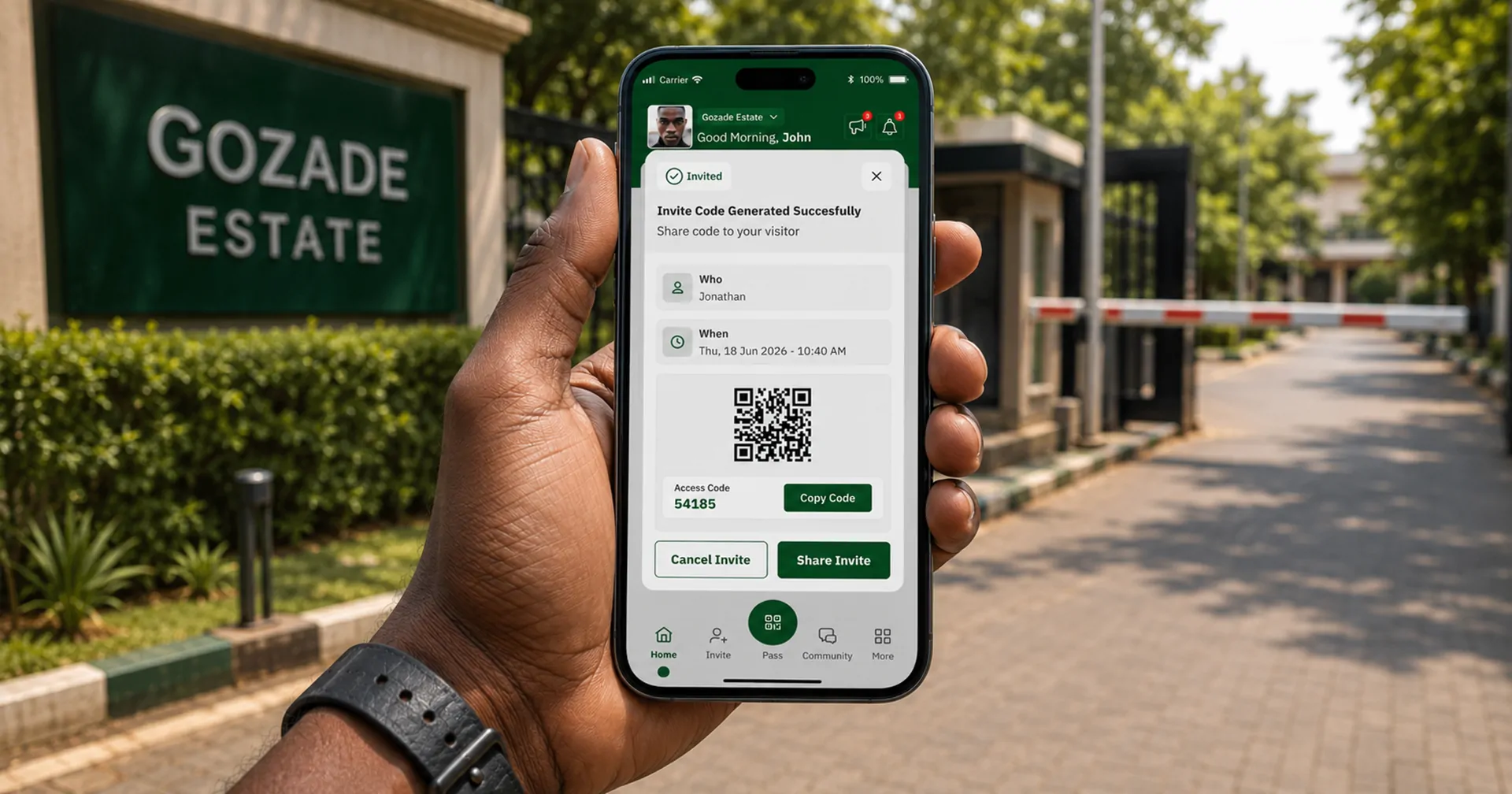
Smart visitor management systems for estates effectively addresses the limitation posed by manual systems by logging visitors digitally through mobile apps. Access codes are generated and validated upon entry into the estate. Each visit is created intentionally, either by residents in advance or by security staff following a guided process. This removes ambiguity and standardizes how access is granted. Real-time visitor authentication and notifications add accountability. Residents receive instant alerts when their visitors arrive. Security can verify approvals before entry is granted, and if a visit expires, access is automatically revoked.
Accurate visitor records are important for audits and incident response. Visitor access management software creates time stamped, searchable logs that show who entered, when, why, and under whose authorization. During investigations, estate managers can recover access history quickly instead of skimming through paper records.
With smart visitor management, digitalization of estate operations that introduces control, and enforceable rules is made possible. Access is recorded and actually managed.
Biometric Access Control Ends Key and Card Vulnerabilities
Keys and access cards, although necessary for access, introduce risk the moment they are issued. They can be lost, shared, or even copied. In residential estates, this creates persistent exposure that is difficult to manage. Biometric access control system for residential estates solves this issue by tying access to identity, not objects. Fingerprint access control systems and facial recognition systems for gated estates verify individuals based on unique biological traits. Entry is granted only when the person matches an approved profile.
Biometric systems also support temporary access. Non-residents can be granted time bound access that expires automatically. Once the access period elapses, entry is denied without the need for security guards to remember revocations. This is especially important for estates with frequent short term visitors and rotating staff.
Biometric authentication significantly reduces unauthorized access incidents by logging every access attempt and attributing it to a specific individual. This creates clear accountability and allows for a smooth estate management without hassle
AI Powered Surveillance Moves Estate Security From Reactive to Proactive
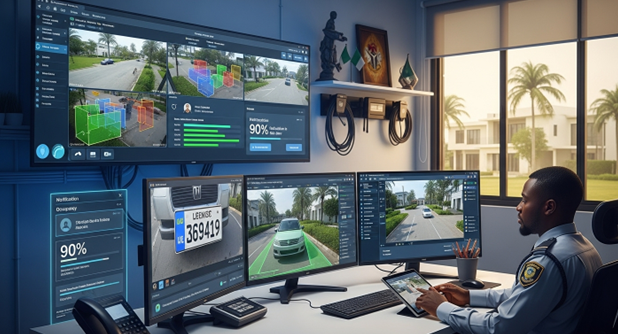
Traditional CCTV systems usually employed in manually run estates rely on passive monitoring. Cameras record footage, but incidents are usually discovered after they occur. This leads to security teams responding late, sometimes having to review hours of video to understand what went wrong. This limits the value of surveillance in modern residential estates.
AI security cameras for estates address this loophole by analyzing video feeds in real time. They detect unusual behavior such as loitering, perimeter breaches, and restricted area access. They can even recognize specific individuals, while reducing false alarms associated with traditional motion sensors. One retail study found that AI cameras reduced false alarms by 90%, cutting monthly alerts from over 200 to just 10. This means that property managers can focus on actual threats rather than every incident that appears like one.
Advanced features such as license plate recognition further provides property managers with added intelligence. Vehicles entering and exiting the estate are logged automatically. In case of an emergency, security teams can easily recover data and generate reports backed by verified insights.
Cloud Based Estate Security Systems Enable Remote Control and Scale
The most significant shift in estate security is the switch to cloud based access control platforms. With these systems, estates no longer need to be fully dependent on a physical control room. They eliminate expensive on-site servers and allow property managers to monitor security, grant access, and respond to incidents from anywhere with an internet connection.
Cloud access control platforms provide property managers with centralized dashboards that provide a real time view of estate activity. Access permissions, visitor logs, and alerts can be managed from a single interface. This helps to reduce the operational overload that comes with managing security manually. The unique feature about this system is that it can be operated remotely. Remote access control for property managers allows access to be granted or revoked instantly without being physically present. Incident response becomes faster because decisions are not delayed by unavailability or manual processes.
Cloud based systems also scale effortlessly. As residential or commercial estates grow, new access points, cameras, or buildings can be added without the need for a major overhaul. Software updates, security patches, and feature improvements are handled automatically keeping the system up to date to align with modern realities.
Integrated Security Platforms Create a Unified Estate Protection System
Security tools deliver the most value when they are incorporated together. Integrated estate security solutions integrate visitor management with access control and surveillance, into a coordinated system. This provides estate managers with a continuous, accurate reflection of activity across the property. This integration ensures every entry event is linked. For instance, when a visitor’s access is approved, they gain entry through a controlled access point. The system automatically logs the visitor, captures their photo, sends notifications to residents, and tracks exactly when they entered and exited the premises.
These integrated platforms also enhance emergency response. If an unauthorized access attempt occurs, the system can trigger alerts, flag associated camera feeds, and notify security teams instantly. During emergencies, managers can identify exactly who is on site, restrict or grant access remotely, and communicate with residents or staff.
Conclusion
Technology has changed the way estate operations are being run. Modern estate solutions benefit both residents and staff to a great degree. Residents enjoy smooth access through their smartphones, while estate staff gain unprecedented visibility and rapid response capabilities.
Modern estate security technology also helps manage cost. With them, the number of staff needed in an estate can be reduced significantly, while improving efficiency. Automated systems reduce dependency on manual checks, and lower the risk of missed entries or records. Over time, this approach delivers better coverage at a reduced cost. The investment in smart security technology typically costs 30-50% less than hiring full-time security personnel while providing 24/7 coverage.
The future of estate security lies in integration, visibility, and control. Scalable systems that connect visitor management, access control, and surveillance, create safer environments that simplify operations. Making the switch to a modern estate operation is a priority for estates that want security to work efficiently, and at scale.
Tags
Tips and Guides
Updates


SYLOGATE
An Estate Management Software Company.
Simplify complexity and manage multiple residents and visitors from a single platform.