The New Reality of Estate Operations in Nigeria
Running an estate in Nigeria today is more of a high-risk operation than mere property management. Residents are buying properties at a very high rate in polished areas like Lekki, Banana Island, Katampe etc, even though these places are much more expensive than other areas in the state. The reason is not far-fetched: residents are willing to pay more for properties or houses that guarantee their safety and peace of mind. This is why estates that cannot deliver all these will lose residents to those that can.
One huge problem is that many estates are still structured for a different era. Physical security sits on one side, and technology on another. It is very possible to have security guards and CCTV cameras working in your estate, yet your mode of operation remains archaic. Having security guards and surveillance cameras is not enough if these separate elements do not communicate well together. When security and technology operate as separate departments, the gaps automatically become blind spots, which is where security incidents begin.
The Gated Estate Security Challenges in Nigeria Today
In 2026, your first reasoning towards addressing the security challenges in gated estates should not be building higher fences, hiring more guards, or installing brighter streetlights. Of course, all these solutions help in improving estate security, but they only go as far as scratching the surface.
Organized crime in Nigeria has grown more structured, and strategic. Nigeria ranks sixth globally in organised crime incidence, which calls for appropriate security solutions. Gated communities, by design, signifies wealth, which makes them prime targets.
Physical threats associated with gated estates include perimeter breaches, unauthorized access, and insider risks from poorly vetted staff. But the digital threats are growing just as fast and receiving far less attention. Nigeria recorded over 119,000 data breaches in Q1 2025 alone, with security tools blocking more than 1.46 million cyberattack attempts in just six months. Estate management platforms storing resident data, payment records, and access logs lie at the forefront of these breaches.
This is why conversations around how to improve estate security in Lagos and other major Nigerian cities are no longer about recruiting more guards or adding more security lights. Guards cannot automatically detect phishing emails, security lights cannot encrypt databases. Modern problems must demand modern solutions. This is why physical security, and digital infrastructure should never operate independently.
Smart Estate Management Technology in Nigeria is Already Here
There is a narrative that smart estates are something that Nigeria will grow into. This is a very outdated thinking because smart estate features like automated gates, centralized energy management, AI-powered surveillance, and app-based control systems are already being integrated into new estate developments across major cities in Nigeria.
Platforms driving smart estate management technology in Nigeria like Sylogate, Gate Africa, and Limestone are already helping estate managers handle visitor access, resident communications, incident response, and service charge collection from a single digital interface. Smart estates are live, and fully operational in Nigerian estates right now.
The rise in smart estate management technology in Nigeria is borne out of the security concerns and the need for premium living especially in major cities like Lagos, Abuja, and Enugu where residents now evaluate estates not just on amenities but on the intelligence of their security infrastructure.
Why Security and Tech Cannot Stay Disconnected
Many estate managers still run physical security through guards and gates while handling digital operations like payments, visitor records, and communications through completely disconnected systems. That disconnection is a liability that can be easily exploited.
Cybercriminals increasingly target estate management platforms because they hold sensitive data like resident financial data, access logs, and identification documents. Once inside, attackers can extract records, redirect payments, or even lock administrators out of access systems all without ever setting foot in the estate.
2024 saw a rise in several high-profile incidents in Nigeria that exposed the vulnerabilities in third-party networks. This resulted in data breaches, financial losses, and operational disruption. Since estates rarely operate with a single vendor, one weak cybersecurity can significantly weaken the entire estate's security.
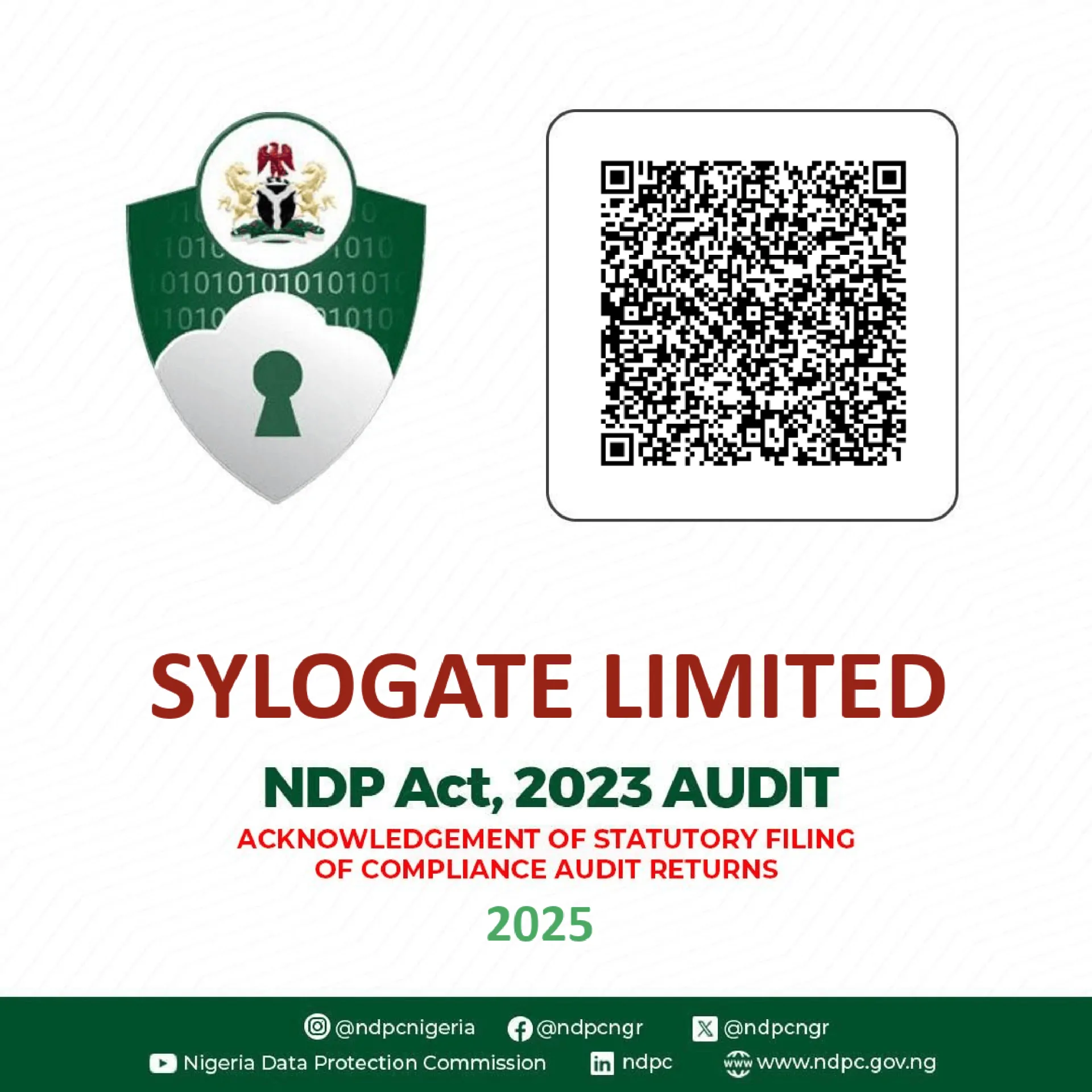
The Nigeria Data Protection Act 2023 requires organizations to implement appropriate technical and organizational measures to secure personal data. That includes encryption, access controls, monitoring systems, and breach of detection protocols. It mandates notification procedures when incidents occur, with fines reaching up to 10 million or 2% of annual gross revenue for non-compliance.
What Integrated Security Looks Like for a Nigerian Residential Estate
When we talk about cybersecurity for Nigerian property managers, we talk about designing an estate operation where the gate, the camera, the payment platform, and the admin dashboard all work in sync. Here is what cybersecurity for Nigerian property managers looks like when it is done right:
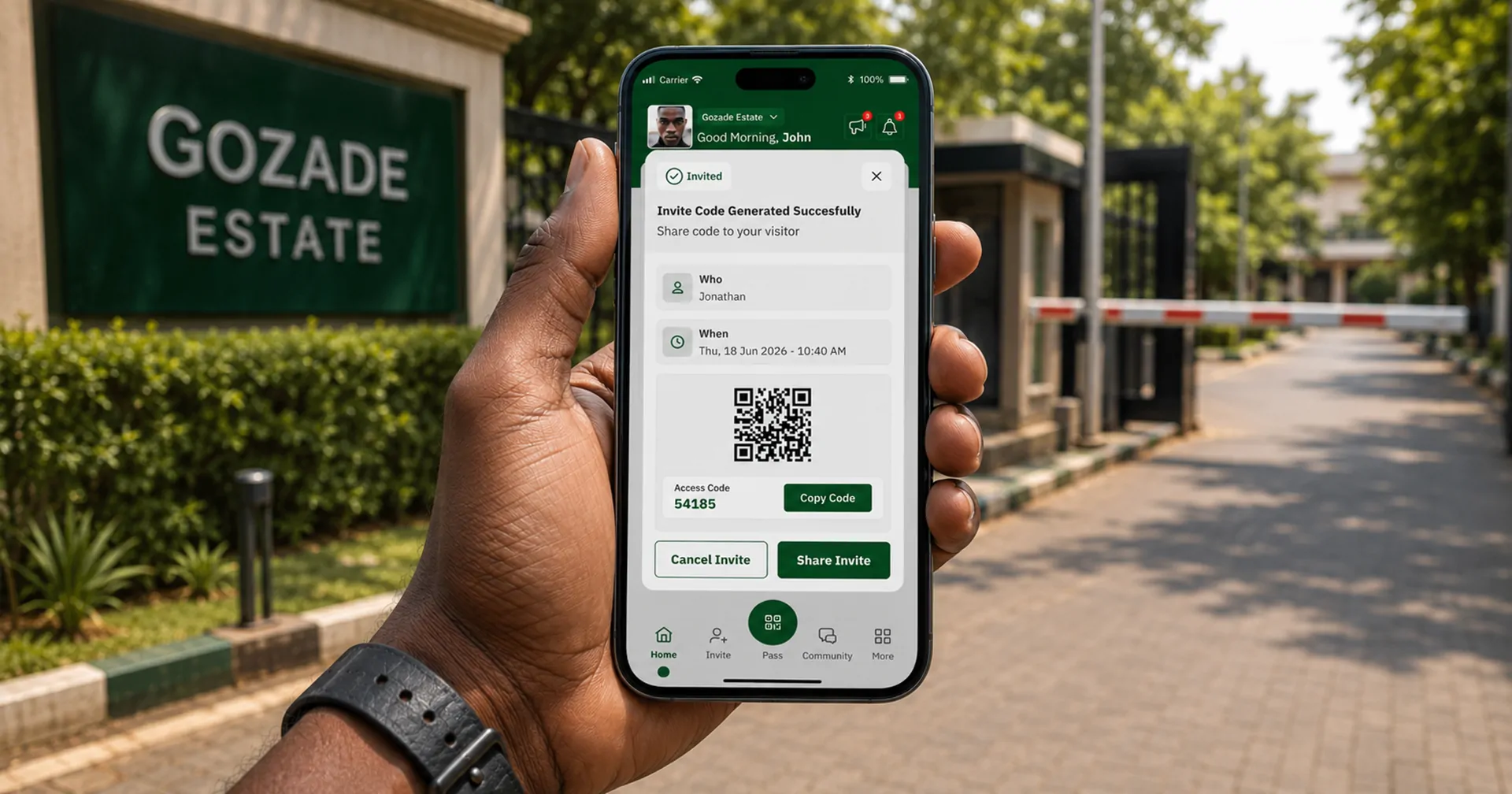
Biometric access control for residential estates replace shared gate keys and access cards that can be lost, copied, or passed on without authorization. With fingerprint or facial recognition readers, estate managers know exactly who accessed which entry point and at what time. When a staff member exits, their access is deactivated remotely with no need for locks to be changed or cards retrieved. With this, it is safe to infer that the era of shared gate keys and easily duplicated access cards is gradually ending.
AI surveillance cameras with real-time mobile alerts go beyond recording footage after an incident has already occurred. Advanced video analytics analyze movement patterns, detect unusual behaviour, and flag perimeter breaches as they happen. The alert is pushed instantly to security personnel. It is almost impossible for unnoticed intrusion into the estate to happen.
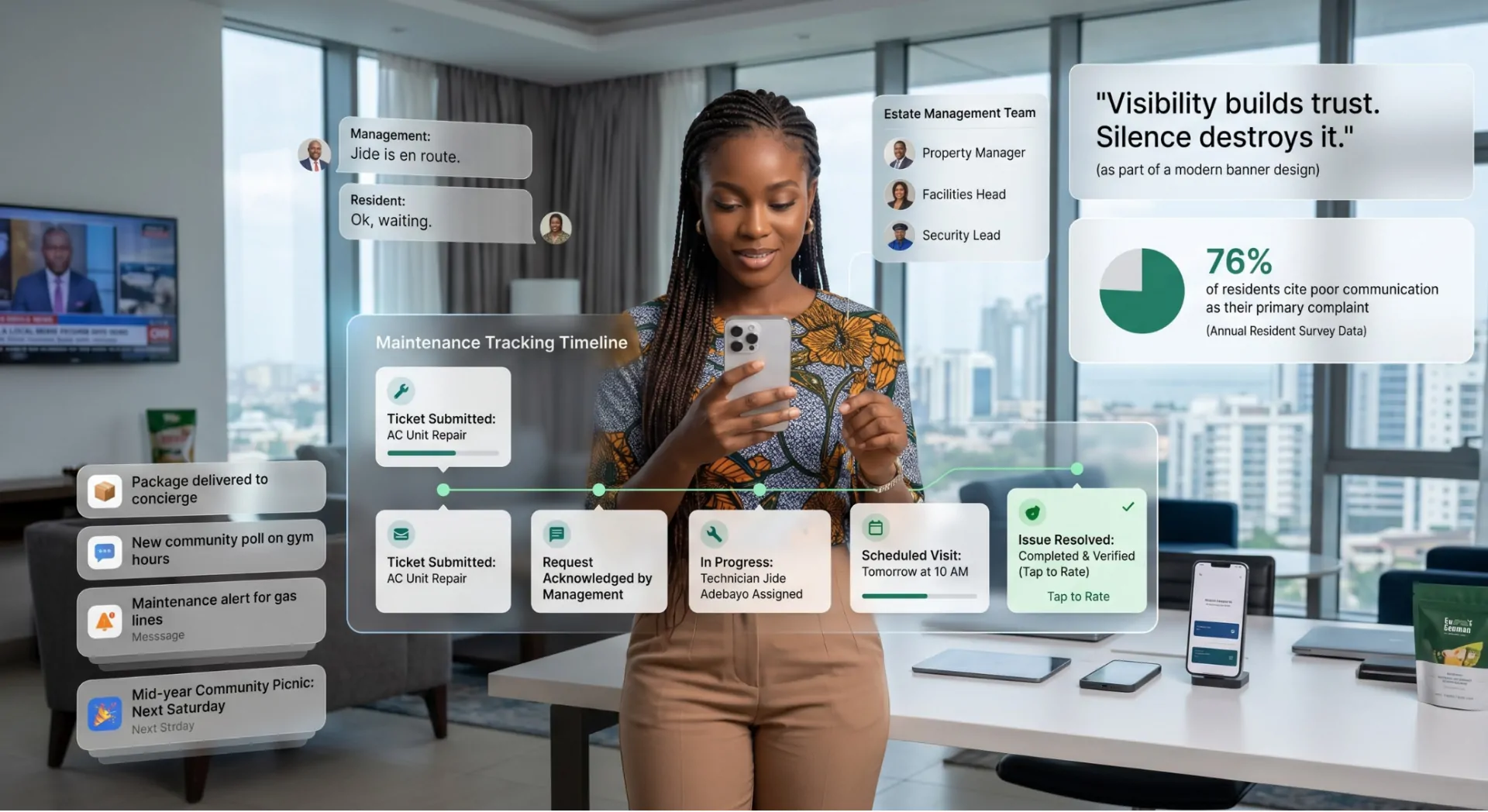
Cloud-based estate management software with access control connects visitor logs, resident payments, gate access, and incident reports into one unified system. When something goes wrong, the data to investigate exists in a timestamped and searchable form. This way, if a resident disputes a charge, the payment record is there. If there is a security concern, entry logs align with surveillance time stamps. Evidence removes every form of unnecessary argument and dispute.
Estate management software with visitor tracking in Nigeria closes the gap between who is allowed in and who entered. Every visit is pre-authorized digitally and logged with time, authorization, and identity. This helps create a verifiable audit trail that eliminates the need for guards relying on verbal confirmations and handwritten notes that can be altered or misplaced.
How to Prevent Data Breaches in Nigerian Estate Management
To be honest, even the most advanced system can be undone by careless habits. Technology is only as strong as the habits built around it. Human error was responsible for 95% of data breaches in 2024, caused by factors like insider threats, credential misuse, and failure to follow cybersecurity protocols. Nigerian estate operations are not exempted from this reality.
Preventing data breaches in Nigerian estate management is therefore as much of a technology question as it is a discipline question. These are the practices that matter most right now:
Multi-factor authentication must be a standard across all estate management platforms, especially those handling resident payments and access logs. A single compromised password should never be enough to unlock an entire system.
Staff phishing training should not be treated with levity anymore because most breaches do not begin with sophisticated hacking. They begin with one staff member clicking the wrong link in a routine-looking email.
Vendor due diligence before granting any third-party software access to estate systems is paramount. This is because every third-party software provider automatically becomes a part of your security system. If their systems are weak, your estate is indirectly vulnerable. Hence, before integration, there must be scrutiny.
Keeping all estate software patched and updated consistently should be a priority. Outdated systems are one of the easiest and most common entry points for attackers. You cannot afford not to be prepared at all times in a digital environment that evolves quickly.
What Next?
Gated communities in Nigeria are often perceived as a haven. The residents choosing them are increasingly intentional about what real security should look like. Merely having a tall fence and uniformed guards no longer cut it.
Integrated security systems for residential estates in Nigeria set the standard right now because both the physical and digital layers of security are fully coordinated. This helps to effectively remove every blind spot.
Security without technology is exposed. For Nigerian estate operations in 2026 and beyond, both must work as one. Sylogate makes that transition seamless. From access control and visitor management to real-time reporting, Sylogate gives estate managers one connected platform to run a smarter and safer community without ripping out their existing security infrastructure.
If your estate is ready to close the gap between physical security and digital control, get started with us today.
Tags
Tips and Guides
Updates


SYLOGATE
An Estate Management Software Company.
Simplify complexity and manage multiple residents and visitors from a single platform.