Featured
Emergency Preparedness for African Estates: What Property Managers Must Have in Place Before a Crisis

Praise Ohans
2026/04/07
If you live in Nigeria or other parts of Africa, you must have at least heard a variation of this story: a fire broke out at 2 a.m., security couldn't reach the property manager, tenants didn't know the evacuation route, and nobody had the fire service number on hand. By the time things were coordinated, the damage had already been done.
This story is recurring because estate operations in Nigeria and across Africa are not preemptive. Property managers would rather react to situations than be proactive about them.
Emergency preparedness is never a topic to address until the moment it becomes a desperate necessity. This guide breaks down exactly what needs to be in place before an emergency hits.
Why Nigerian Estates Face Unique Emergency Risks
Not all estates operate under the same conditions. What works in one country does not always translate into another. In Nigeria especially, flooding is the most prevalent environmental disaster, with flooding in cities like Lagos and Ibadan a seasonal expectation every rainy period. For estates without proper drainage planning, this becomes a massive risk factor. Flooding, particularly in Lagos, is highly predictable, yet still underprepared for.
Beyond natural hazards, violent crimes, such as armed robbery, carjacking, and kidnapping, remain a significant concern in major urban centers, with Lagos and Abuja among the cities requiring heightened vigilance.
When you factor in emergency response time in these cities, the risks become even heavier. In many cases, external emergency response systems are not immediate. Fire services, medical response, and police intervention are not always instant. With this, the need for property managers to have their own systems becomes paramount.
1. Build a Written Emergency Response Plan (ERP)
If there is one thing every estate must have before anything else, it is this: a written plan. An Emergency Response Plan is a critical framework that documents the procedures and actions to take during an emergency. This involves evacuation routes, communication protocols, emergency contacts, utility shut-off procedures, and assigned roles. At a minimum, your ERP for property management should cover five critical elements:
For Nigerian estates specifically, this plan should cover:
Flooding: identify drainage risks, evacuation assembly points, and alternative exit routes during high water levels
Fire outbreaks: document the location of fire extinguishers, muster points, and the contact for the nearest fire station
Security threats (armed intrusion, kidnap attempts): define lockdown protocols and staff escalation chains
Medical emergencies: identify the nearest hospital and whether any staff hold first aid certification
It is important to note that an ERP is not a one-time document. Emergency preparedness requires ongoing commitment: fire drills, protocols, and contact information must be regularly updated and tested.
2. Centralize Your Emergency Contacts and Make Them Instantly Accessible
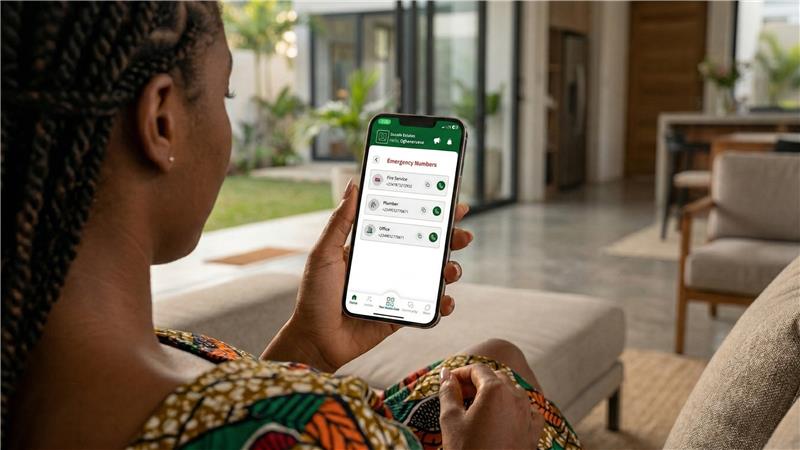
On no account should your tenants scramble for emergency contact lines during an incident. The time lost during this process can be very costly, given that every second counts in an emergency. Ensuring tenants have a consolidated list of emergency numbers is a crucial step that too many estate managers skip.
This is where modern property management tools come in. Sylogate solves this directly by automatically setting up police and local hospital profiles within the app. All that a property manager has to do is input the contact details there. They can also create additional emergency profiles and contacts like fire service, private security response, estate clinic etc. This helps to build a complete and always-accessible emergency directory inside the app every resident already uses. All a tenant has to do to reach these emergency contacts is a single tap.
3. Install a Panic Alert System
Security threats in Africa are diverse and often unpredictable. Therefore, having robust emergency response mechanisms in place is crucial for ensuring the safety and well-being of residents. Traditional security measures like guards, CCTV, and intercom, although valuable, are slow. When a resident is in immediate danger, seconds matter.
Sylogate's panic alert button is a GPS-enabled distress system built for exactly this scenario. When triggered in the mobile app, it instantly notifies estate staff and reveals the tenant's location. This enables rapid and targeted intervention. GPS-enabled distress systems are the current standard of estate security in Africa and are what modern residents now expect in gated communities.
4. Control Who Enters the Estate
Estate emergencies don’t always begin with earthquakes, flooding, or fire outbreaks. It could be as simple as allowing someone who shouldn't have been inside the property in the first place. The presence of an access control system serves as a deterrent: when criminals know they'll encounter resistance and identification requirements, they are far less likely to attempt intrusion.
Effective access control is a critical component of estate safety in Nigeria. Yet, many estates still rely on manual estate management: a system that is inconsistent and easily bypassed by many.
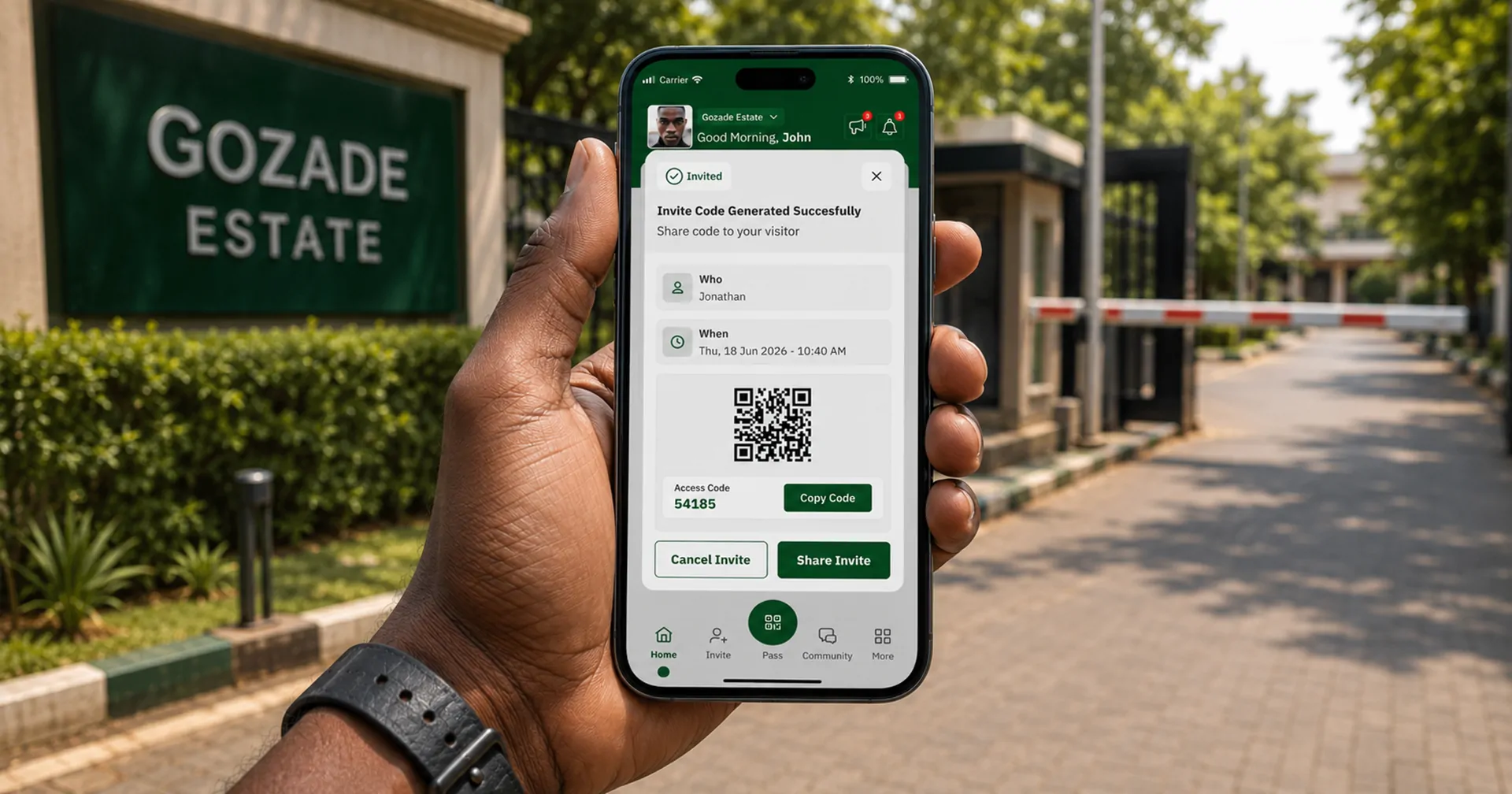
Sylogate addresses this with a digital visitor access code system: strangers and visitors can only enter the estate once a resident has generated and shared a unique access code for them. No code, no entry. This eliminates the risk of non-residents gaining entry into the compound.
This results in a complete, verifiable log of who entered the estate and the time they did. This information also serves as a detailed audit trail should anything go wrong.
5. Conduct Risk Assessments and Infrastructure Inspections
Not every emergency happens suddenly. Oftentimes, they are built slowly over time. It could be a blocked drain, a loose wire, or an expired piece of equipment. It is very easy for small issues to spiral out of control when not monitored regularly. This is why a proper estate risk assessment in Nigeria is important for preventing avoidable damage. For estates in Nigeria, Congo, and other African countries, this translates to practical actions like:
Inspecting drainage channels before the rainy season. Urban flooding in Lagos and Ibadan is often worsened by blocked drains and refuse in waterways
Checking generator connections and electrical fittings. Faulty wiring is a leading cause of residential fires
Auditing fire extinguisher expiry dates and placement
Confirming that evacuation routes are unobstructed
6. Train Your Staff and Engage Your Residents
In emergencies, it is people who react, and not your document. If the people who are meant to respond are unsure, untrained, or uninformed, your document breaks down. This is why you must know how to train staff on new systems. It is essential for acting fast and more efficiently under pressure.
Residents are not left out and should be involved. Share evacuation routes, run periodic safety reminders, and post emergency numbers in common areas. Communities where residents are engaged with emergency procedures consistently fare significantly better during actual crises.
Conclusion
Emergency preparedness for African estates comes down to three things: having a plan, having the right contacts, and controlling your environment before a crisis happens. Most of this is as simple as making decisions in advance rather than in the middle of chaos.
Platforms like Sylogate exist to help with executions like integrating emergency contacts, panic alerts, and visitor access control into one platform that property managers and residents can rely on when required.
Tags
Tips and Guides
Updates


SYLOGATE
An Estate Management Software Company.
Simplify complexity and manage multiple residents and visitors from a single platform.